Payment Solutions: Hardware and Software That Work Together
Hardware and Software That Work Together
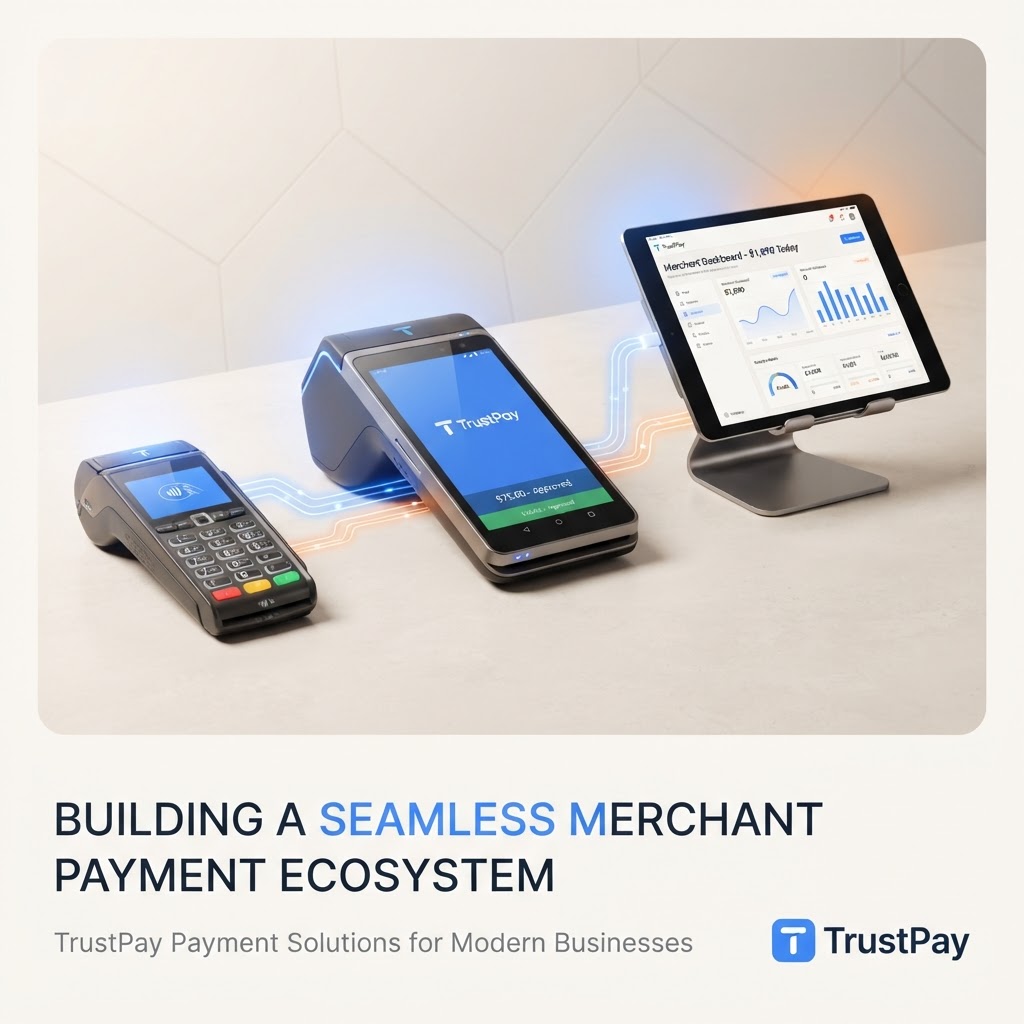
Payment solutions become more valuable when the hardware and software work together from the first order to the final report.
A connected payment setup helps merchants:
- Move customers through checkout faster
- Reduce duplicate data entry
- Simplify employee workflows
- Improve reporting accuracy
- Connect in-store and online sales
- Give customers more convenient payment options
- Support better decisions in the back office
- Add new capabilities without replacing everything that already works
The bundle is not valuable because it contains more equipment. It is valuable because each component supports the others.
💰 Turn Every Checkout Into One Connected Flow
Disconnected tools create extra work at every step.
A customer places an order in one system. An employee enters the total into a separate terminal. A receipt comes from another device. Sales data moves into a spreadsheet. A manager reconciles payments at the end of the day.
That process creates avoidable friction.
With connected TrustPay POS hardware and software, the flow is simpler:
Order → Payment → Receipt → Reporting
The POS calculates the sale. The payment terminal receives the correct amount. The transaction closes after approval. Sales information flows into reporting automatically.
The practical result
- Fewer screens for employees to manage
- Fewer amounts to type manually
- Fewer opportunities for mismatched totals
- Less time spent reviewing transactions
- Faster training for new staff
- A smoother experience for customers
A connected setup turns payment processing from a separate task into a natural part of the sale.
📉 Reduce Manual Work Without Reducing Service
Every extra step costs time.
Assume a disconnected checkout requires an additional 20 seconds of manual entry. At 200 transactions per day, that creates:
20 seconds × 200 transactions = 4,000 seconds
That equals more than 66 minutes of extra work every day.
The time cost becomes even greater when employees correct mistakes, reconcile separate reports, print replacement receipts, or call different vendors for support.
Integrated hardware and software remove many of those repetitive steps. Employees can focus on customers instead of moving information between systems.
Use a countertop terminal for a fixed checkout. Add a handheld device for tableside service, mobile selling, events, or line-busting. Support each workflow with software that keeps the transaction data connected.
⬡ Give Employees a Clearer Path From Order to Payment
Employees perform better when the process is simple.
A connected system can link:
- Product selection
- Pricing and modifiers
- Discounts
- Taxes
- Tips
- Payment acceptance
- Receipts
- Refunds
- Employee permissions
The employee enters the sale once. The system carries the correct information forward.
That reduces uncertainty at the counter and gives staff a more consistent process during busy periods. It also makes training easier because employees learn one workflow instead of memorizing instructions for several unrelated systems.
For managers, role-based permissions and employee reporting add control without adding unnecessary steps.
🍽️ Connect the Front Counter to Kitchen Operations
Restaurants need more than a payment terminal. They need ordering, preparation, service, and payment to move together.
A connected TrustPay setup can link:
- Counter, table, kiosk, or QR ordering
- POS order entry
- Kitchen display operations
- Handheld payment
- Receipts and customer records
- Sales and performance reporting
When an order flows directly to the kitchen display, employees do not need to carry information from one station to another. Modifiers and special instructions remain attached to the order. The kitchen sees what needs to be prepared. The front-of-house team sees order progress.
At the payment stage, a handheld device can bring checkout to the table or service area. Customers can pay without an unnecessary trip to a fixed register.
The benefit is operational clarity:
- Fewer order communication gaps
- Better visibility into pending items
- More flexible payment locations
- Less congestion at the main counter
- Faster service during high-volume periods
The equipment matters. The connection between the equipment matters more.
🛍️ Keep Retail Sales, Inventory, and Checkout Aligned
Retail businesses need payment hardware that supports the entire sale.
A barcode scanner can send the selected item to the POS. The POS calculates the total. The terminal receives the payment amount. Inventory updates after the transaction. The dashboard records the sale.
Retail teams can also use connected tools to support:
- Inventory visibility
- Employee performance tracking
- Discounts and promotions
- Customer history
- Digital receipts
- Multi-location reporting
- Contactless payments
- Online and in-store sales
The result is a cleaner operating picture. Managers can review sales activity without comparing multiple systems line by line.
🚐 Support High-Value Sales With Better Payment Workflows
RV dealerships and other high-ticket businesses often need more than standard card acceptance.
A large purchase may begin with an in-person conversation, continue through an invoice, and finish with a remote or bank-based payment.
A connected payment environment supports those steps through:
- In-person card acceptance
- Online payment pages
- Payment links
- Virtual terminal processing
- ACH payment options
- Invoice workflows
- Settlement reporting
- Back-office reconciliation
For example, a $30,000 transaction processed at a 2.5% cost represents $750 in processing expense. A suitable ACH workflow can provide a lower-cost payment option for eligible high-value transactions.
⬡ Improve Service Businesses Without Rebuilding Everything
Service businesses often collect payments in several places:
- At the office
- At the customer's property
- By phone
- Through an invoice
- From a recurring billing schedule
- Through an online payment link
A fixed terminal may work well at the front desk. A handheld terminal can support technicians, installers, delivery teams, or mobile staff. A virtual terminal can handle payments by phone. Online tools can collect deposits or final balances.
The software keeps those payment events connected to the business record.
That means less time searching for payment details and more visibility into open invoices, completed transactions, customer history, funding activity, refunds, recurring payments, and employee activity.
📊 Replace Fragmented Reporting With Back-Office Visibility
A payment bundle should make reporting easier, not create another data silo.
TrustPay's connected environment can bring sales, payment, settlement, and operational information into a clearer dashboard. Managers can review activity across physical locations, online channels, and supported payment methods.
That visibility helps businesses:
- Track daily sales
- Compare locations
- Review employee performance
- Monitor refunds and discounts
- Reconcile deposits
- Identify slow periods
- Measure customer engagement
- Plan staffing and inventory
A finance team should not need several logins to understand what happened during one business day.
Connected reporting also makes support easier. TrustPay adds 24/7 human support through real people who can help resolve payment and setup issues.
🔄 Add Capabilities Without Replacing What Already Works
Modernization does not require a complete teardown.
A merchant can start with the most urgent problem:
- Add better hardware to an existing workflow
- Connect POS software to payment acceptance
- Add online ordering
- Introduce ACH for larger transactions
- Add invoicing and receivables automation
- Support cryptocurrency payments
- Expand to additional locations
- Replace only the equipment creating friction
This approach protects the investments that already serve the business while improving the areas that limit growth.
For a business processing $50,000 per month in card sales, a 2% processing cost equals $1,000 per month. Better payment strategy can have a direct effect on operating margin.
🤝 The TrustPay Difference: Connected Value, Not More Complexity
TrustPay combines the components that merchants need to operate and get paid:
- Modern countertop and handheld hardware
- POS software
- Credit and debit card acceptance
- Online payments
- ACH
- Cryptocurrency payments
- Invoicing and payment links
- Reporting and analytics
- Customer engagement tools
- 24/7 human support
The goal is not to sell a longer feature list.
The goal is to make the important business moments work together:
Ordering. Checkout. Employees. Customers. Operations. Funding. Reporting.
That is the value of bundled payment hardware and software.
🚀 Evaluate Your Payment Setup Today
Your payment solution should support the way your business actually operates.
Start with an evaluation of your current hardware, software, payment costs, reporting, and staff workflow. Keep the parts that perform well. Fix the parts that slow down sales, create manual work, or limit visibility.
Get a free TrustPay quote and review a connected setup built around your business.
TrustPay.us: hardware and software that work better together.
Ready to eliminate processing fees?
Join hundreds of US merchants saving thousands every month with TrustPay.
Get Your Free Quote →