
ChargeAnywhere + Datecs Ecosystem
The best operating model for ISVs and agents selling payment solutions, built to delight merchants' teams
- 1ChargeAnywhere provides the gateway and integration infrastructure
- 2Datecs provides certified hardware
- 3TrustPay.us sells to merchants, introducing solution fit and pricing
Payout Recap
Simulation/Estimates for a $80K/mo Merchant
Here is an example of who pays or gets paid based on the following $ volume example. Estimated $999 bundled HW/SW and POS for 1 location with Dual Pricing/Cash Discount enabled. (to be validated)
Credit cards
$55,000
1,100 transactions at $50 average
ACH
$15,000
10 transfers at $1,500 average
Pay-by-bank, debit and cash
$10,000
Settles at the cash price, no processing fees
Total monthly acceptance
$80,000
5 terminals, 1 merchant account
Consumers pay
Cash discount / dual pricing (3%)
With dual pricing / cash discount
+$1,650 / mo
3% service fee on $55,000 card volume
Without: merchant absorbs costs
$0
Consumers pay the card price only, no service fee
Merchant pays
Processing (interchange + per-txn)
With dual pricing / cash discount
-$1,265 / mo, fully offset
Without: merchant absorbs costs
-$1,493 / mo hard cost
ChargeAnywhere collects
Gateway + one-time deployment
With dual pricing / cash discount
$105 / mo
Combined monthly gateway costs per the gateway simulator · one-time deployment: $225
Without: merchant absorbs costs
$105 / mo
The same Schedule A gateway fees still apply
Datecs collects
Terminal hardware bundle
With dual pricing / cash discount
$1,099 one-time
Bundle @$1,099 sold to merchant (excludes sponsorship or promotional launch discount). One-time buy and no monthly fees.
Without: merchant absorbs costs
$1,099 one-time
Same bundle, one-time buy, no monthly fees
TrustPay.us & agent collect
Program net: service-fee surplus
TrustPay.us keeps
$99 to $300 / mo
Agent residual (15% off net)
$40 / mo
Why dual pricing matters
Without dual pricing the same merchant absorbs about $1,493 a month in processing and gateway costs instead of paying $0. The consumer-paid 3% service fee is what funds every number above.
Merchant Scenario
One merchant, one evaluated solution
A specialty retailer needs countertop, mobile and online payments. It keeps its existing commerce or inventory software, so ISV compatibility is required, not optional. It also wants one support path, reliable settlement, simpler reconciliation and a clear total cost before making a change.
Live Simulator
Your exact cost on Gateway and ChargeAnywhere fees
Gateway and ChargeAnywhere fee simulator
Every gateway and ChargeAnywhere fee below is taken directly from the pricing presented to TrustPay. Defaults model a retail merchant processing $100,000 per month; adjust anything to fit your business.
Business profile
2,000 transactions / month, 0 online.
Base plan
Add-on services (optional)
Your estimated monthly cost
| QuickSale SMB bundle, monthly per-TID fee | $5.00 |
| Gateway transaction fee | $100.00 |
| Total monthly | $105.00 |
| Full-service terminal deployment (one-time) | $45.00 | |
| Total one-time | $45.00 |
Who Pays, Who Earns
The merchant pays the stack; the agent earns the margin
A quick recap of the merchant above: $80,000 in monthly acceptance, $55,000 of it on cards, on the dual pricing / cash discount program. All costs are the merchant's or the consumer's; the agent's residual comes from the share of program margin, never from an added fee.
These costs are the merchant's
- Every cost in the projections above is paid by the merchant: $1,265/mo processing.
- The 3% service fee is charged to consumers on card payments. That consumer-paid fee funds the program revenue, not the merchant's pocket.
- The consumer-paid service fee covers every merchant cost above; any $ surplus is remitted to TrustPay.us as program net, which the agent's residual is paid from.
- The agent never pays any of these costs; the agent's residual is a share of the program margin, never an added fee.
Estimated Earnings range for Agent
$80,000 / month acceptance, dual pricing applied
About $481 per year from this one merchant.
See the full partner programSolution Architecture
Six layers, one accountable delivery
| Layer | Owner | Primary responsibility |
|---|---|---|
| 1 | Merchant application or ISV | Ordering, invoicing, commerce workflow and customer experience |
| 2 | QuickSale HUB | APIs, SDKs, payment orchestration, device connectivity and integration services |
| 3 | Datecs Go Line hardware | Certified countertop, mobile, integrated and unattended acceptance devices |
| 4 | ChargeAnywhere gateway | Secure transaction routing, tokenization, monitoring and processor connectivity |
| 5 | Processor or acquirer | Underwriting, authorization, settlement and funding |
| 6 | TrustPay.us and local agent | Audit, solution design, commercial explanation, deployment coordination and escalation |
QuickSale HUB Capabilities
The integration backbone, documented
The ChargeAnywhere Go Line catalog describes QuickSale HUB as the infrastructure connecting software, payment experiences, certified hardware and gateway or acquiring services. The documented capabilities include:
- Developer APIs, SDKs, documentation and integration support for ISVs
- Card-present, card-not-present, mobile, online and unattended payment experiences
- End-to-end encryption, tokenization and PCI DSS Level 1 service-provider controls
- P2PE-ready solutions and tools supporting risk and compliance management
- Multi-network connectivity with automatic failover
- Processor flexibility and transaction routing to acquiring and settlement services
- Cloud-based scalability, multi-region support, reporting, analytics and real-time monitoring
Datecs Hardware Examples
A certified device for every checkout style
| Device | Best fit | Relevant capability | ||
|---|---|---|---|---|
| Datecs BlueLite V2 | Mobile acceptance | Compact secure mobile payment reader for on-the-go acceptance | 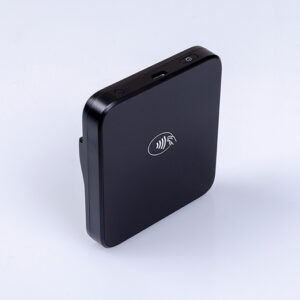 | $93 |
| Datecs BluePad-50 Plus | Countertop or integrated | Smart touchscreen PIN pad supporting chip, contactless and mobile wallets | 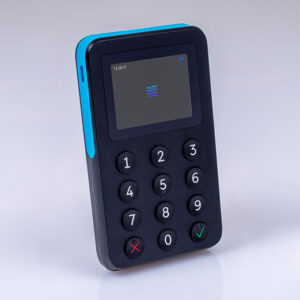 | $129 |
| Datecs BluePad-5500 Plus | High-volume counters | Full-featured smart terminal built for high-volume counters | 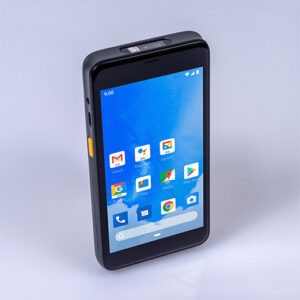 | $279 |
| Go mPOS Reader | Mobile acceptance | Compact tap, chip and optional magnetic-stripe reader with mobile OS compatibility | 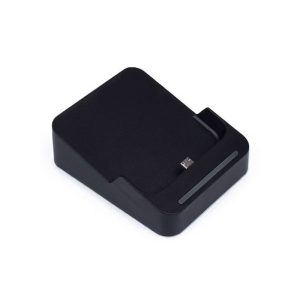 | $170 |
| Go PIN Pad | Countertop or integrated | PIN pad supporting chip, contactless, mobile wallets and USB connectivity | 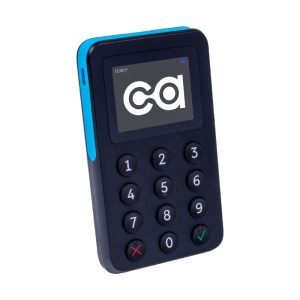 | $99 |
| Go Pad Plus | Countertop smart terminal | Advanced smart terminal with touchscreen business capabilities | 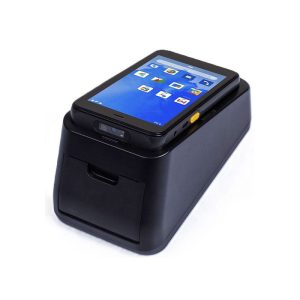 | $399 |
| Go Pad Pro (Datecs BluePad 55) | Mobile and integrated | Certified payment device with tap, chip, swipe, optional wireless and cellular connectivity | 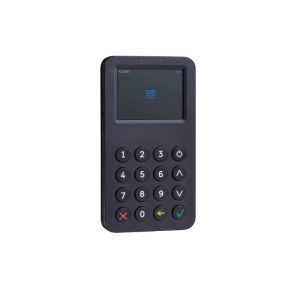 | $182 |
| Go 50 (Datecs BlueCash 50) | All-in-one merchant terminal | Android terminal with 5.4-inch display, integrated receipt printer, cameras and optional barcode reader | 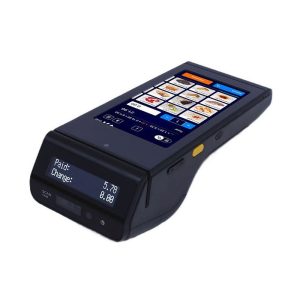 | $279 |
| Go Tab | Tablet POS | Durable tablet solution with power and portability in one | 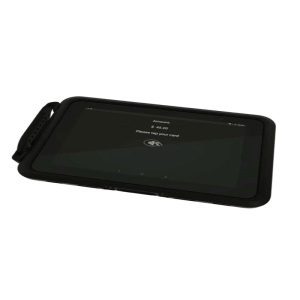 | $399 |
| Go Unattended | Kiosk and self-service | Contactless device with USB and RS-232 connectivity for unattended environments | 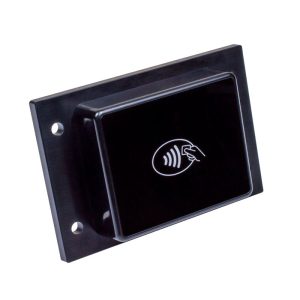 | $899 |
| Go-50 Unattended | High-traffic unattended | Android terminal supporting contactless, chip, swipe, barcode and multiple machine interfaces |  | $491 |
| CFT50 with Battery | Portable countertop | Battery-powered countertop terminal for flexible placement | 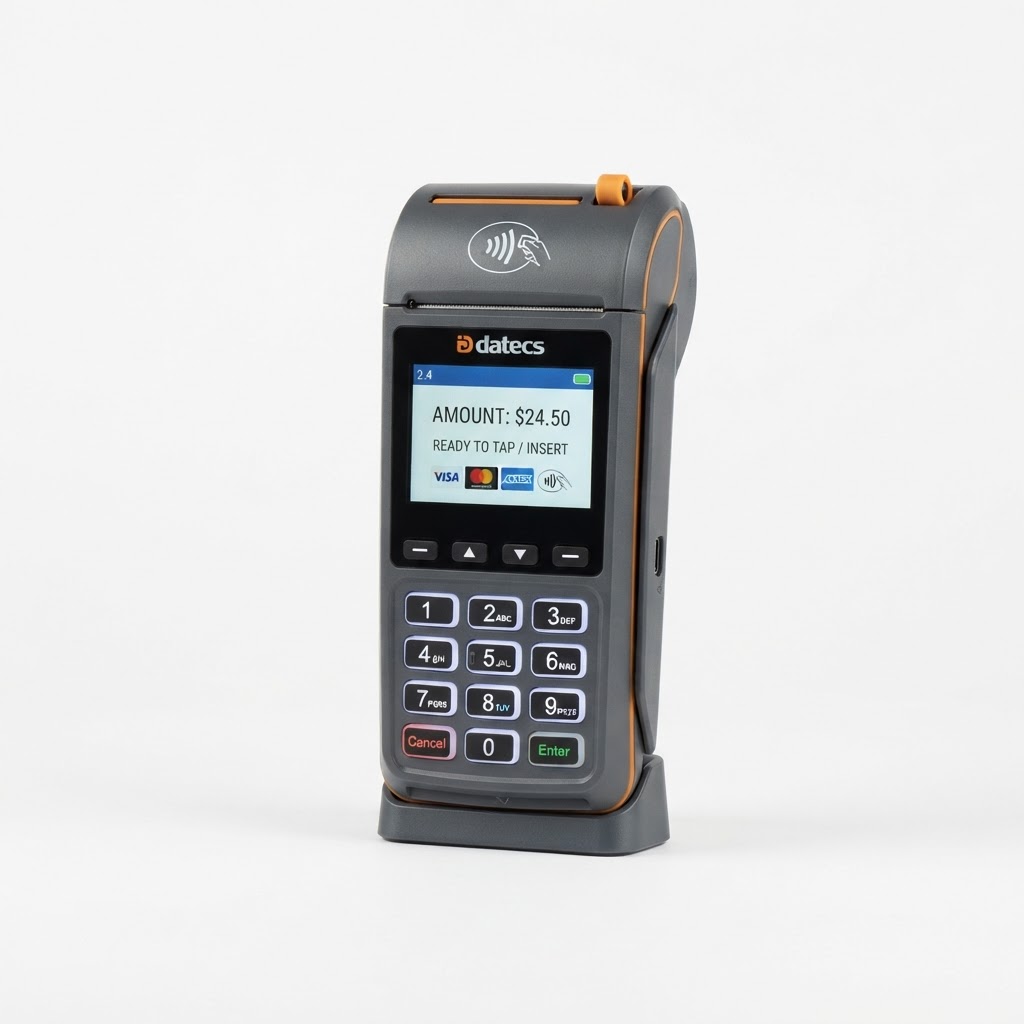 | $336 |
Partner Responsibility Matrix
Every participant owns its contribution
| Participant | Owns | Accountability |
|---|---|---|
| TrustPay.us | Merchant audit, solution design, economics, partner coordination | Baseline requirements, commercial comparison, escalation governance |
| ChargeAnywhere | Gateway, QuickSale HUB, APIs, SDKs, transaction routing | Integration support, platform availability, monitoring and gateway escalation |
| Datecs | Payment hardware engineering, certification and device support | Device quality, technical documentation, firmware and hardware escalation |
| ISV | Merchant application workflow and user experience | Application integration, release management and software support |
| Processor or acquirer | Underwriting, authorization, settlement and funding | Merchant approval, processing continuity and settlement accuracy |
| Agent | Local relationship, installation, training and first response | Accurate representation, deployment readiness and issue triage |
| Merchant | Business requirements, operating data and staff participation | Accurate disclosure, testing, training and timely issue reporting |
Example Merchant Workflow
From audit to live results in eight steps
- 1
TrustPay.us reviews statements, contracts, transaction volumes, payment channels, existing software and reconciliation requirements.
- 2
TrustPay.us and the merchant define the required experiences such as countertop, mobile, online, invoicing or unattended acceptance.
- 3
ChargeAnywhere and the ISV confirm the QuickSale HUB integration path, gateway functions, processor support and certification status.
- 4
TrustPay.us selects the appropriate Datecs hardware configuration and verifies device, software, gateway and processor compatibility.
- 5
The processor or acquirer completes underwriting and confirms pricing, settlement and compliance requirements.
- 6
The agent installs the equipment, trains staff and validates test transactions, refunds, settlement and end-of-day procedures.
- 7
All parties receive an escalation map identifying first response, technical ownership and commercial ownership.
- 8
TrustPay.us reviews initial results against the documented cost, operating and service baseline.
Support and Escalation Model
Documented ownership before deployment
| Issue | First response | Escalation owner | Expected resolution path |
|---|---|---|---|
| Device will not power or read a card | Agent | Datecs hardware support | Device diagnostics, replacement or firmware action |
| Application cannot initiate a transaction | Agent or ISV | ChargeAnywhere integration support | API, SDK, configuration or application correction |
| Transaction declines or does not settle | Agent | Processor or acquirer | Authorization, underwriting or settlement resolution |
| Gateway or network interruption | ChargeAnywhere | Processor or network partner | Routing failover, monitoring and incident resolution |
| Pricing or statement discrepancy | TrustPay.us | Processor or gateway commercial team | Reconcile billed terms with approved proposal |
| Merchant requests a new payment method | TrustPay.us | ChargeAnywhere, ISV, processor and compliance partners | Confirm support, economics, certification and implementation path |
Commercial and Trust Standards
How TrustPay.us presents the numbers
- Merchant pricing is presented as a complete cost comparison rather than a headline rate
- Agent and partner compensation is disclosed at the appropriate level
- Only certified or operationally validated combinations enter the compatibility matrix
- A cash-discount or dual-pricing program is described as cost reallocation and remains subject to eligibility and compliance requirements
- No provider is presented as universally interchangeable with another
- Support ownership is documented before deployment
- Merchant results may inform future benchmarks only with consent and appropriate anonymization
Value by Participant
Why every party joins the model
| Participant | Primary value |
|---|---|
| Merchant | One evaluated solution, clearer economics and a defined support path |
| ChargeAnywhere | Qualified merchants and ISVs using the gateway and QuickSale HUB capabilities |
| Datecs | A route into supported deployments and structured field feedback |
| ISV | Embedded payments and device options without building the entire payment stack |
| Processor | Better-qualified accounts with documented requirements and local support |
| Agent | A consultative sales method, training and explicit recurring economics |
| TrustPay.us | A repeatable coordination model built on audit evidence and partner accountability |
Success Measures
What a good outcome looks like
- Reduction in total payment and software cost where the baseline supports it
- Successful first-time device and software deployment
- Transaction authorization, settlement and funding performance
- Lower support handoffs and faster issue resolution
- Improved reconciliation and less manual back-office work
- Merchant retention and expansion into additional payment channels
- Actionable feedback returned to ChargeAnywhere, Datecs, the ISV and the processor
Conclusion
Coordination, not ownership
The ChargeAnywhere and Datecs relationship gives TrustPay.us a concrete example of ecosystem coordination. ChargeAnywhere connects software, devices, payments and processors. Datecs supplies specialized, certified hardware. TrustPay.us turns those capabilities into a documented merchant decision and assigns responsibility across implementation and support.
The model succeeds when every participant remains accountable for its own contribution and the merchant no longer has to diagnose the spaces between them.
Talk to the TrustPay.us TeamSources
Documentation behind this model
- Device MSRP: ChargeAnywhere published up-to-1,000-unit pricing plus a 25% margin premium, rounded up to the nearest dollar
- ChargeAnywhere Go Line Product Catalog, 2025 Edition
- Datecs BluePad 55 product documentation
- Datecs BlueCash 50 product documentation